
Agent Harness Design Decides What Your AI Can Touch
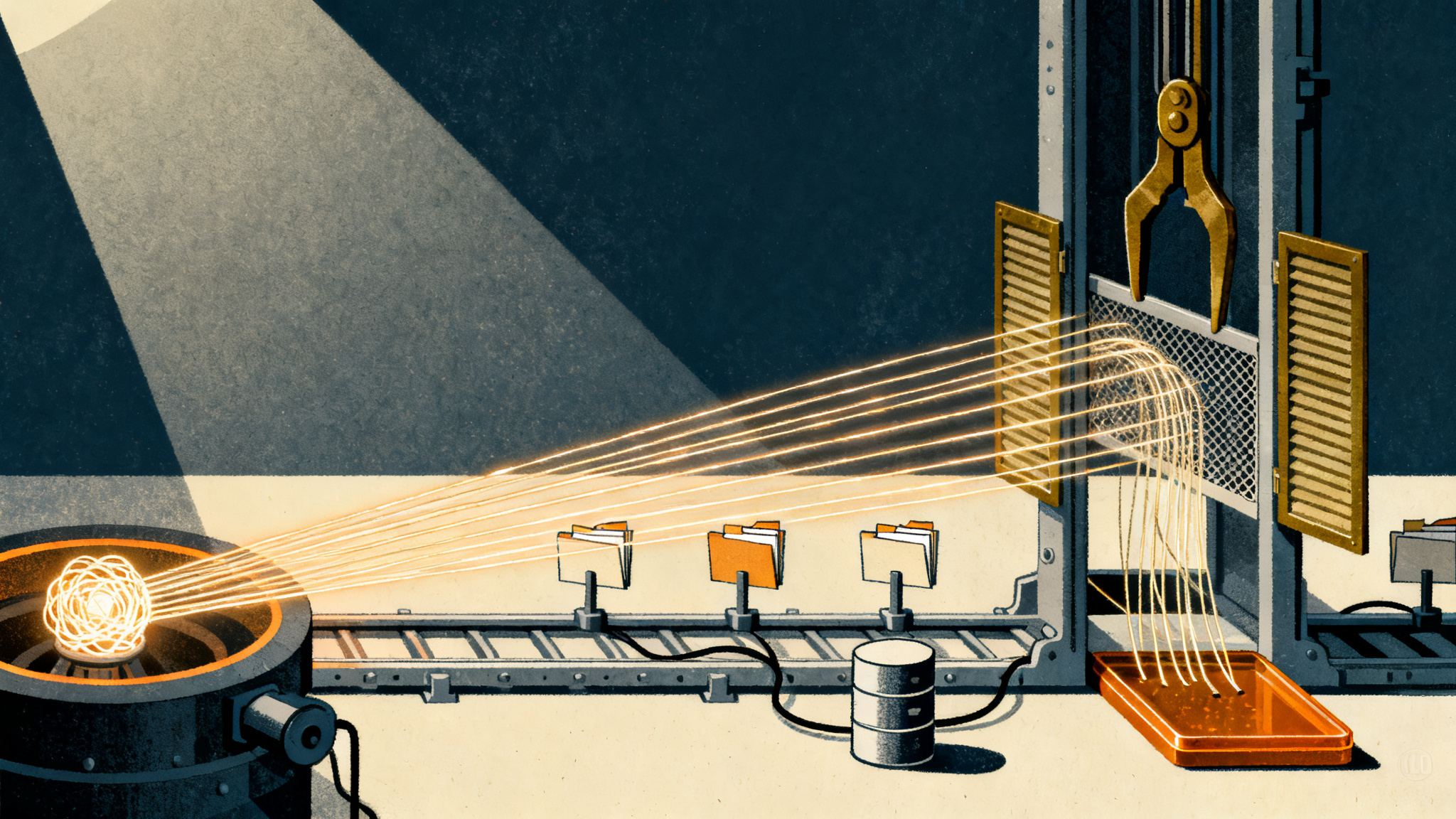
A GitHub snapshot dated April 2026 traces the term "agent harness" to late 2025, and the thing it names now decides what your AI coding agent is allowed to touch. An agent harness is the runtime wrapper that turns a bare language model into an agent: it runs the loop, executes tools, assembles context, and enforces the safety boundaries the model cannot manage on its own (harness-engineering guide). If you run coding agents on real work, agent harness design is where your safety actually lives, because the wrapper, not the model, decides which files, commands, and APIs the model's reasoning can reach.
That last sentence is the whole argument. The rest of this post is how to act on it.
The loop nobody wants to think about
Strip away the branding and an agent is a program running in a loop. An arXiv survey describes the cycle plainly: in each iteration the model plans and decides whether to call tools, and if a tool is called, its result feeds back into the next iteration (arXiv). The loop ends when the model stops requesting tools and returns plain text.
Everything around that loop is the harness, and one curated GitHub list describes it more sharply than I can: the harness is "the runtime that turns a model into an agent: it decides what the model's reasoning is allowed to touch" (best-of-agent-harnesses). That includes orchestration, tool wiring, memory, error recovery, and guardrails around each inference turn.
The vocabulary is young, which is why it still feels fuzzy. The same field snapshot notes "agent harness" emerged in late 2025 / early 2026 to describe the orchestration layer that runs an agent, deliberately distinct from a framework (higher-level abstractions for building agents) and a backend (inference and model serving) (AI-Harnesses). The distinction matters when you're buying or building. If someone is selling you "agent safety," ask which layer it runs on, because a prompt is not a boundary and a model is not a control.
Four parts, and the one everyone skips
The field snapshot lists the necessary and sufficient conditions for a harness as a runtime layer with at least four elements: an agent loop, a tool interface, context management, and control mechanisms. The awesome-harness-engineering list frames the surrounding discipline as designing the scaffolding around an agent, covering context delivery, tool interfaces, planning artifacts, verification loops, memory systems, and sandboxes, and argues that scaffolding determines whether the agent succeeds or fails on real tasks (awesome-harness-engineering).
Here's my read on where teams spend their effort versus where their incidents come from. Context management gets all the attention, because tweaking prompts and context files feels productive and shows results within minutes. Control mechanisms get skipped, because nobody notices a missing boundary until the day it matters.
There's a useful split in the research here. An arXiv paper on harness engineering for agentic AI coding tools separates context engineering, which designs the runtime context, from harness engineering, which customizes the harness's configuration mechanisms, such as context files and subagent definitions, to shape tools and agent behavior per project. The paper's own line on it: "This customization of the harness, not only the context, is harness engineering" (arXiv).
Most people I talk to are doing context engineering and calling it harness engineering. The difference is the difference between writing a better briefing and deciding what doors exist in the building.
Microsoft's rule, and why it's bigger than prompt injection
Prompt injection gets the conference talks. The rule that prevents more real incidents is duller, and Microsoft put it in plain text on their Agent Safety page: "Always validate and sanitize LLM output before rendering it in HTML, executing it as code, using it in database queries, or passing it to any security-sensitive context" (Microsoft Learn).
Think about what that means inside a coding agent. The loop executes whatever the model emits as tool calls, so if file writes, shell commands, and query strings flow straight through to execution, a hallucinated file path becomes a deleted directory and a plausible-looking query string becomes your data walking out the door. The model cannot police its own output at execution time, which is exactly why the harness definition puts safety boundaries in the wrapper rather than the model (harness-engineering guide).
My contrarian take: for small operations, one validation gate between model output and execution is worth more than any amount of prompt hardening. It's boring, it's cheap to build, and it catches the failure mode that actually takes down small shops, which is confident garbage being executed without review.
What a small shop should actually do
You do not need a platform team for this. A GitHub course on building a coding agent from scratch describes a headless harness that runs in terminal and remote modes, deploys on Modal, fires multiple parallel attempts per task, and records every run so it can be replayed with swapped models or prompts (building-a-coding-agent-from-scratch-course). Two of those features carry most of the value for a one-person operation.
Parallel attempts turn "the agent failed" into "attempt three of five passed," which changes your retry math completely. Recorded runs are even better, because they turn a bad output into a reproducible case you can test future models and prompts against instead of guessing whether an upgrade helped.
Your working checklist, built from the four-element definition and the safety rule above:
- Name your four elements explicitly: agent loop, tool interface, context management, control mechanisms. If you can't point to where a control lives, it doesn't. - Validate and sanitize every piece of model output before it executes as code, hits a database, or enters anything security-sensitive. - Run agent attempts in sandboxes, which the harness-engineering lists count as core scaffolding, not an optional extra. - Record every run so a failure becomes a test case rather than a war story.
For small businesses and solo operators, this is the whole opportunity. You can't out-hire the safety problem the way an enterprise tries to, but you can out-configure it, and the harness layer is small enough that one careful person can hold the entire design in their head. The model arms race is someone else's budget line. The wrapper is yours.
If you're running coding agents against client work and you've never audited the harness layer, do that before the next model upgrade. And if you want a second pair of eyes on your agent setup, that's literally what my agency does, so get in touch.
Comments ()