
AI Agents Can Now Spend and Trade Without You
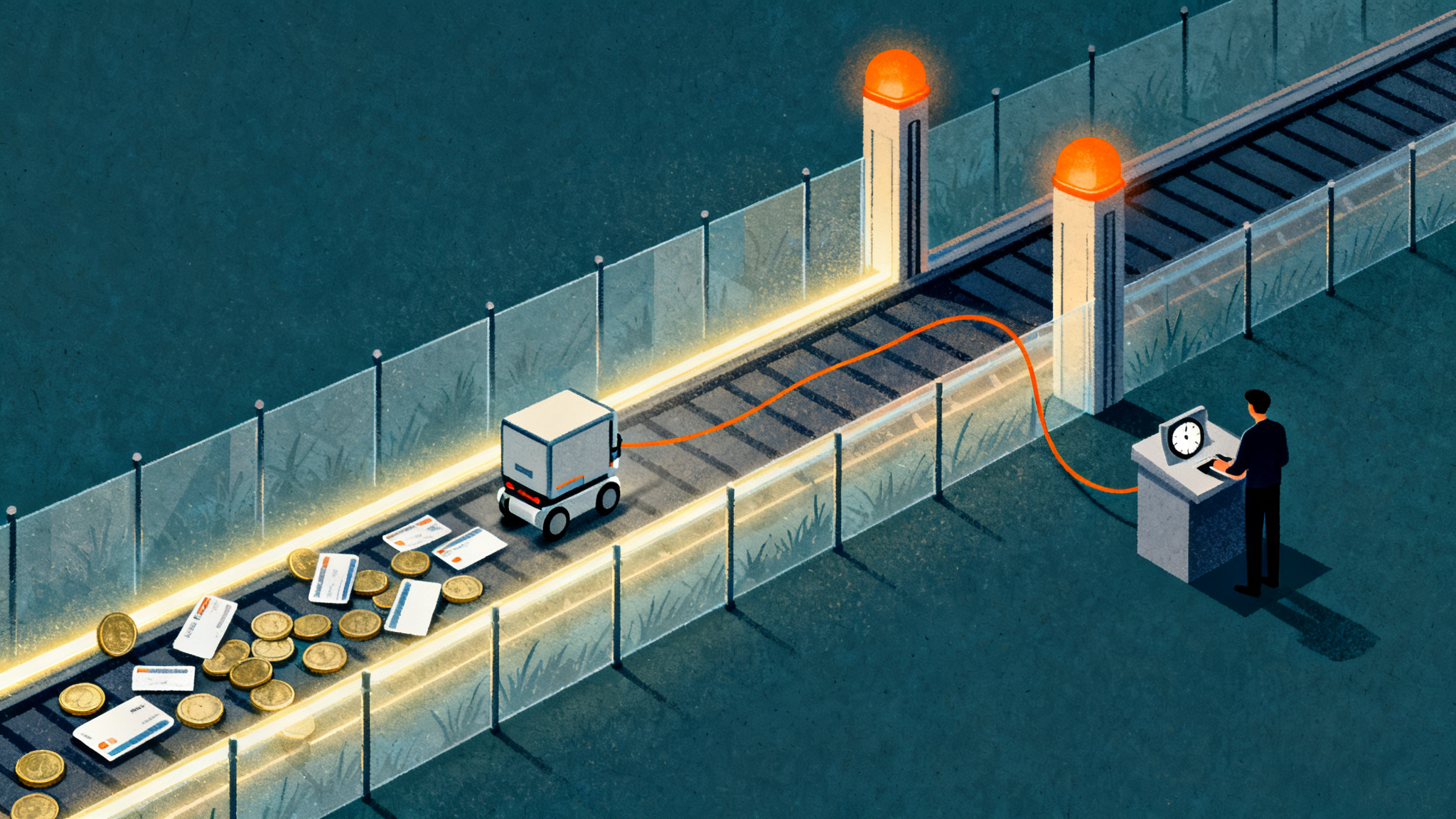
Stripe gave 150 million Link wallets to AI agents on April 29, 2026. And Robinhood followed on May 27, 2026 with Agentic Trading and an Agentic Credit Card. AI agent payments and autonomous trading are now live in production on two of the biggest rails in consumer finance, not sitting on a roadmap slide. Agents can authenticate, authorize payments. And run agent-to-agent transactions through Stripe's security setup, AI Business Review reports. And they can trade stocks and swipe a virtual card on behalf of Robinhood's 27.5 million customers, per CNBC. The real story isn't the autonomy. It's the containment built around it: sandboxed accounts, one-time-use cards, spending caps only you control. That combination is what makes any of this survivable, and it's the part most coverage skips.
Stripe Turned Agent Payments Into an API Call
Stripe moved first. On March 18, 2026, Stripe and Tempo launched the Machine Payments Protocol, an "open standard, internet-native way for agents to pay" that handles microtransactions and recurring payments. The flow is simple enough to fit in one sentence: an agent requests a resource from an API, an MCP server, or any HTTP endpoint, the service responds with a payment request, the agent authorizes. And the resource gets delivered.
The money lands in your Stripe Dashboard like any other payout, on your normal balance and schedule.
Accepting MPP payments takes a few lines of code through Stripe's PaymentIntents API.
Settlement runs in stablecoins via Tempo or in fiat through cards and buy-now-pay-later services like Klarna and Affirm via Shared Payment Tokens, TechTimes reports.
The same coverage explains the underlying trick: protocols like MPP and x402 embed payment negotiation into HTTP 402 responses. So an agent receives the payment request, signs a stablecoin payment, attaches proof, and retries the original request automatically.
No human taps approve. x402 itself was contributed to the Linux Foundation's x402 Foundation in April 2026.
Then came the consumer-scale version. Link's wallet for agents, announced April 29, 2026, sits on top of Stripe's Issuing for agents and hands agents programmatic access to Link, including one-time-use cards and Shared Payment Tokens backed by the user's existing cards and bank accounts.
Businesses that want their own agentic wallets get the full Issuing APIs to customize them.
Here's why this matters if you build software. Your agent stops being a read-only helper that summarizes pages and becomes a stateful system that can buy what it needs mid-task. A pay-per-call flow beats a subscription you forgot to cancel when your agent needs one API response at 2 a.m. Stripe's own agent documentation now has a section literally titled "Accept payments from agents," which tells you who they think is knocking on merchants' doors next.
Robinhood Gave Agents a Brokerage Account and a Card
Robinhood went further than payments. On May 27, 2026, it launched Agentic Trading and the Agentic Credit Card, letting customers connect their own third-party AI assistants to trade and spend, in CNBC's words, "with minimal human involvement."
Look at the guardrails, because they're the design. Agentic Trading runs in a dedicated account that's separate from the rest of your portfolio. So your agent only touches the funds you deposit into it. The Agentic Credit Card connects through Robinhood Banking's MCP server to a dedicated virtual Gold Card, where you set a specific spending limit that only you control. And you choose whether every transaction needs manual approval or the agent can spend freely inside the cap. While it runs, the agent scans for best prices, monitors availability. And buys automatically, earning 3% cash back, with a real-time activity feed showing what it's doing.
I find the framing in most coverage backwards.
Reporters call this "agents trading autonomously." The shipped product is a bounded delegation primitive: a sandbox with a deposit cap, a virtual card with a ceiling, an approval toggle, and a live log. Robinhood didn't remove the human from the loop. They shrank the blast radius until the human can safely look away for a while.
The Leash Is the Product, Not the Caveat
Run the inventory across both launches and a pattern shows up. Stripe ships one-time-use cards and tokenized credentials. Robinhood ships a sandboxed account, a user-controlled cap, an approval toggle, and an activity feed.
Every autonomy feature arrives welded to a containment feature.
Now look for who answers the failure question. What happens when an agent buys the wrong SKU, double-pays for an API call, or rebalances into a position you hate at 3 a.m.? Stripe's Agentic Commerce Suite includes fraud detection and order events in a single integration, which covers detection. Refunds, disputes, chargebacks, and who eats the loss when an autonomous transaction goes sideways are absent from every announcement I read in this research. For agent-to-agent payments there's no obvious equivalent of calling your bank and saying "I didn't authorize that," since by definition you set the agent loose to authorize things.
That gap is where small operators get hurt first.
Enterprises have fraud teams and procurement policies to absorb a bad autonomous purchase. You have a business card. So treat the missing dispute story as your own problem to solve at the architecture level. And don't delegate more spend authority than you can afford to write off.
What You Should Actually Do This Month
Four moves, in order of urgency:
- Read Stripe's agent docs even if you never build an agent. The docs describe agents acting as intermediaries that present product feeds, manage carts, and accept payments between buyers and sellers. If you sell on Stripe, some of your buyers are about to be software, which means your product data needs to be machine-legible, not just pretty on a landing page. - Meter your AI costs properly. The `@stripe/agent-toolkit` npm package inserts billing middleware and reports token usage to Stripe Billing through the Meter API, and `stripe agent setup` installs the plugin or skills. If you run an AI app on usage-based billing, this is the boring plumbing that makes it billable. - Copy Robinhood's pattern for any agent you operate. Dedicated virtual instrument, hard dollar cap only you control, approval toggle, activity feed you actually check. Not your main accounts, ever. - Fund agent accounts by deposit only. The agent touches what you put in, nothing else. That's the whole model, and it works.
The launches are real, dated, and shipping. What separates the operators who benefit from the ones who get burned isn't access to these rails, since access is now a few lines of code. It's whether you sized the leash before you clipped it on.
If you run a small shop and want an agent that can pay for what it needs without torching your card, that's exactly the kind of automation I build: capped, logged. And small enough to survive a bad day. Tell me what you'd let an agent buy on its own. And I'll tell you how I'd fence it in.
Comments ()