
Anthropic IPO Filing: The $498 Billion Line Everyone Missed
Anthropic IPO paperwork went public on October 26, 2026, and the number everyone is quoting is the wrong one.
The S-1 does show an $80.7 billion net loss on $16.3 billion of revenue for the first half of 2026. And that loss will lead every recap. The figure that should stop you sits deeper in the filing: Fortune's read is that $498 billion, or 76% of the dollar value of Anthropic's disclosed arrangements, is noncancelable.
Anthropic, PBC filed the Form S-1 with the SEC for a proposed initial public offering of Class A common stock and intends to list on the Nasdaq Global Select Market under the symbol "ANT," per Anthropic's announcement. The share count and price range are undetermined, and the registration statement has not yet become effective. The company confidentially submitted the document in June 2026 before making it public, The Verge reported. Treat the whole thing like a vendor contract, because that is exactly what it is.
What the filing actually says
The mechanics are simple.
Anthropic, PBC filed a registration statement on Form S-1 with the SEC on October 26, 2026, covering a proposed IPO of Class A common stock.
Listing destination is the Nasdaq Global Select Market, ticker "ANT." Neither the number of shares nor the price range had been set at announcement. And the registration was not yet effective. So treat any specific deal-size number you see floating around as invented until the amendment lands.
The Verge frames the filing as the company behind Claude beating OpenAI to a public listing. And that framing matters more than the mechanics. For the first time, Anthropic's cost structure exists as a public document you can cite. Every claim the company has ever made about its business now has a paper trail attached. And that paper trail is on EDGAR for anyone to read.
The $80.7 billion loss is mostly accounting, not cash
The headline pair: $16.3 billion in revenue and an $80.7 billion net loss for the first half of 2026, per The Verge's read of the S-1. Before you screenshot that loss, read Fortune's explanation of where it came from: the vast bulk of the paper deficit arose from changes in the fair value of convertible notes. In plain terms, the loss grew largely as the company kept getting more valuable, which is a strange species of bad news.
The filing also discloses that co-founder and CEO Dario Amodei's 2025 compensation totaled nearly $18 million, most of it in stock and option awards. That detail matters once the listing happens, since stock awards get marked against a share price every quarter. The person making safety-versus-speed calls at a lab built around caution now holds a financial instrument that rises when the market likes speed.
$498 billion in noncancelable commitments
This is the section I would read twice.
The S-1 details eight contracts listed under "infrastructure service agreements" and "infrastructure equipment leases," with partners including Microsoft, Amazon, and SpaceX, per Fortune. The Verge pulled the specific numbers:
- Microsoft: $44.9 billion through 2033 - Google: at least $114.5 billion through 2033 - Amazon: $110 billion over the next ten years - SpaceX: about $3.1 billion per month for Nvidia GPU access once all planned capacity is delivered, totaling as much as $120.5 billion by 2029
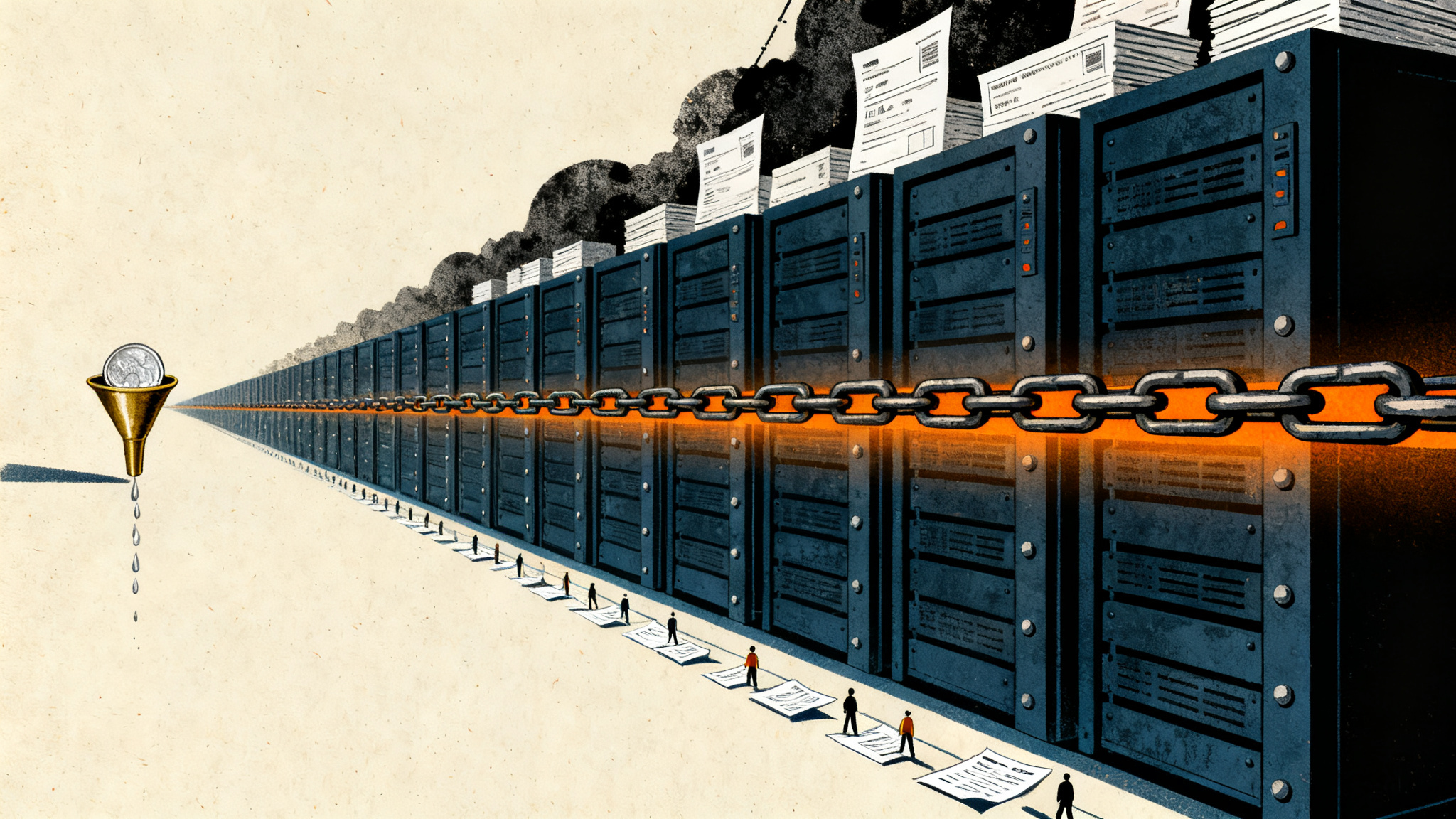
Fortune's takeaway is the part that should reorganize your thinking: $498 billion, or 76% of the dollar value of those arrangements, is noncancelable.
Anthropic ran $16.3 billion of revenue in half a year against obligations it cannot walk away from at anything close to that scale. My read as an operator: a vendor locked into that much fixed cost has exactly one lever for closing the gap. And that lever is what you pay per token and per seat. Pricing pressure now has a structural floor under it, written into a public filing.
More than 90 pages of risks, three worth your time
CNBC counted more than 90 pages of risk factors in the document.
Most of it is standard lawyer-proofing. But three items The Verge flagged deserve attention from anyone building on these models.
The filing names the possibility that its AI models develop "forms of sentience" as a business risk.
That reads less like a prediction and more like the company's research anxieties translated into disclosure language, interesting but not operable for you. It names "AI-specific taxes" as a risk, which is a real cost line the moment governments decide AI revenue looks taxable. And it names unfavorable resolutions to ongoing copyright disputes over how its models are trained, which is the one that touches the product most directly, given that copyright outcomes shape what models get trained on and what that training costs.
If you ship on Claude, your supply chain just changed
You do not have to buy shares for this filing to affect you.
The moment the listing completes, there is a share price, an earnings calendar. And a set of investors sitting between you and the API your product depends on. The same vendor whose changelog you track now too has quarterly disclosure obligations and $498 billion of bills to grow into.
That changes three things for a small operation. First, build portability into anything you ship, with a fallback model wired in before you need it, as migration under pricing pressure costs more than migration planned on a quiet Tuesday. Second, price your own work with headroom for API cost increases, since your vendor's cost floor is now public and enormous. Third, read the risk factors yourself before you bet a business on a single vendor, since the company has already told you in its own words what it is worried about.
Read it before you buy it, or before you build on it
The Anthropic IPO filing gives you a ticker, "ANT," on the Nasdaq Global Select Market, an $80.7 billion accounting loss that Fortune attributes mostly to convertible note valuations, $16.3 billion of half-year revenue.
And roughly half a trillion dollars of noncancelable compute commitments. That last number is the story, and it is the one your costs will eventually answer to. Open the S-1 on EDGAR, search the commitments section, then write your portability plan this week. An hour of reading now beats a forced migration under a price hike later.
Comments ()