
Claude Code Review Goes GA: Anthropic Ships Its Own Playbook
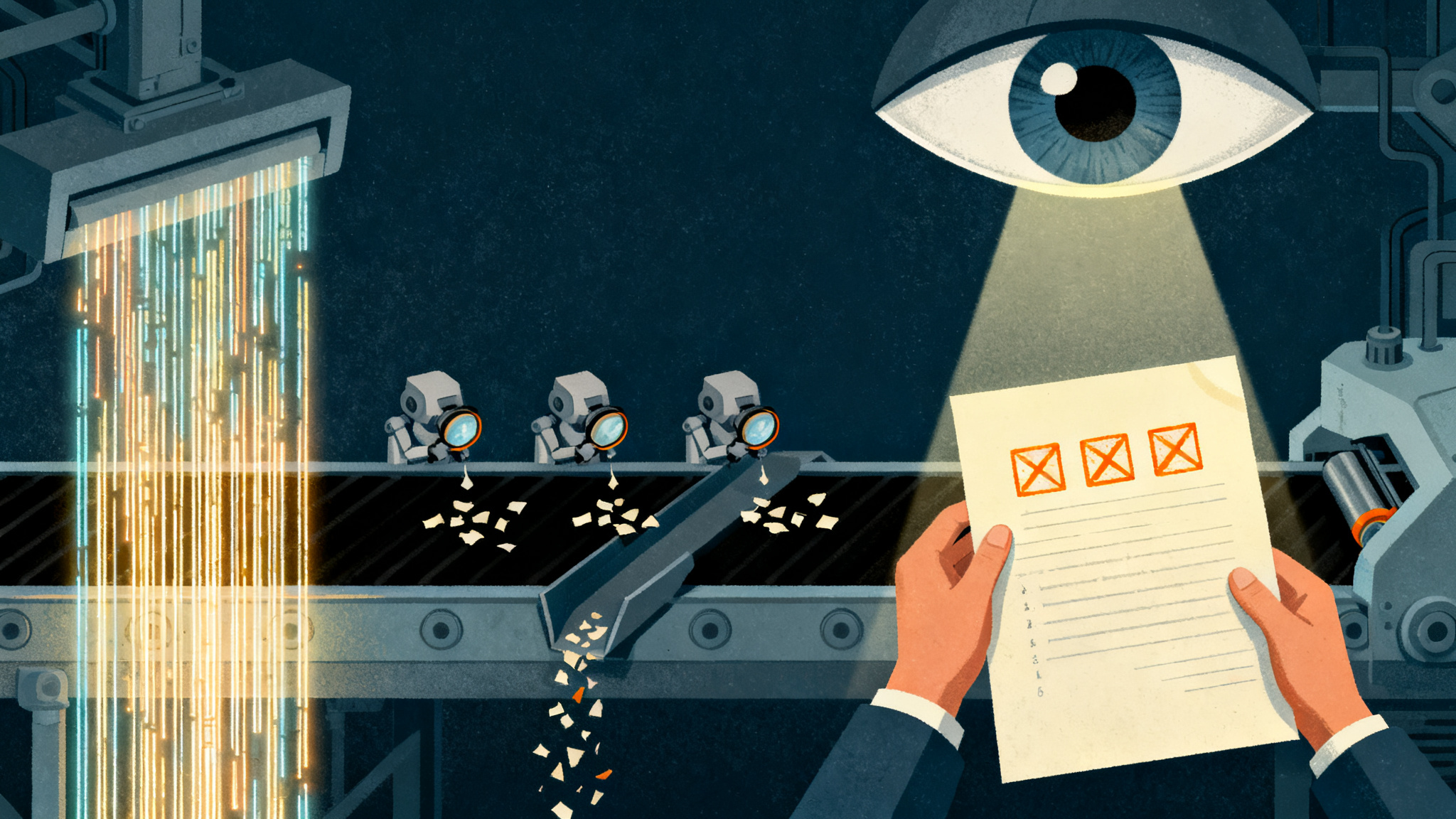
Claude Code Review went GA on October 15, 2026, and Anthropic didn't just flip it on. It published the internal doctrine behind the product the same week. Two artifacts, one story. When agents write most of the code, reading it is where the work piles up now. That's the whole admission, and it's buried in a launch announcement.
The GA announcement says it in one line: "Code Review is now generally available for Team and Enterprise plans." Out of the research preview in beta, into general availability.
The same announcement describes the product as "the system we run on nearly every PR at Anthropic." Mechanically it's simple to narrate. You open a PR. A team of agents reads the change plus the code around it, checks its own findings to strip false positives. And ranks what's left by severity. Then it posts one overview comment and inline comments on specific bugs.
That loop is the product.
It's also a playbook you can copy for free.
Two Artifacts, One Launch
The GA shipped alongside an engineering post on how Anthropic runs review inside its own walls. Vendors almost never do this. Product goes out, internals stay home.
Publishing both at once turns the product into a case study of itself.
The strongest claim in the whole package is the dogfooding one. "It's the system we run on nearly every PR at Anthropic," per the product article. A vendor that ran the thing on its own PRs before selling it to you. That beats a benchmark chart you can't reproduce.
One eye open, though. "Nearly every PR" is carrying quiet weight in that sentence.
And you don't get the exception list.
First-party usage is still the only vendor evidence that's ever meant much to me.
Because the failures show up in how they built the thing, not in the marketing.
How Claude Code Review's Four Stages Work
Per the Claude Code docs, a review runs on Anthropic infrastructure in four stages.
Find is where "several agents examine the diff and the surrounding code in parallel." They hunt logic errors, security vulnerabilities, and broken edge cases.
The setup guide — support article 14233555, if you're keeping track. Adds regressions to that list.
Verify comes next, and here's the exact language: "a verification step checks the candidate findings against the code and filters out false positives."
Rank: "the findings that remain are deduplicated and ranked by severity."
Post: "the review posts its results on the pull request." And the shape of that output — "a single high-signal overview comment, plus in-line comments for specific bugs". Matters as much as the detection does.
Think about every bot reviewer you've ever hated. It was a mechanic handing you a list of every noise the car makes. Verify is the mechanic who tells you the two noises that'll leave you on the shoulder of the highway.
Checking each candidate against the actual code before reporting is the difference between a reviewer and a firehose, since noise trains humans to ignore the bot within a week.
Steal that shape for your own scripts whether or not you buy the product.
Agents propose. A second pass verifies against the code. Output gets deduped and severity-ranked. One readable summary instead of forty comments.
The Second Job, the One That Dies
The engineering post opens with a framing I hadn't seen anywhere else: "Code review does two jobs:" finding and fixing issues before release. And building shared context and codebase understanding across the team.
Claude Code Review is a machine for job one.
Job two is what quietly goes.
At any healthy team I've watched, job two is the actual product of review. The diff is the excuse; the shared mental model is the yield. Automate the diff-reading and you keep the bug catches but lose the compounding understanding. The part that made your senior people senior.
Solo, it reads different. You're the team. The shared context is between you today and you in six months, staring at a repo an agent wrote while another agent approved it. No human ever loaded that codebase into a head. It works until it doesn't.
When did you last read a diff line for line, all of it?
My line doesn't move on this: agents can find, verify, dedupe, rank.
I still read every diff that touches load-bearing paths.
Severity ranking exists precisely so you know which paths those are.
Setting Up Claude Code Review in Three Steps
On a Team or Enterprise plan?
Setup is three moves per the announcement: enable Code Review in your Claude Code settings, install the GitHub App, then select the repositories you want reviewed.
Point it at the one repo where a bad merge costs the most. And watch what Verify actually catches before you widen the net.
On pricing and seats: the announcement doesn't name a separate price or a per-seat add-on.
Access rides on Team and Enterprise plan eligibility.
Known limitations, stated plainly: there's no published false-positive rate, the exception list behind "nearly every PR" stays hidden.
And nothing in the four stages builds shared context across your team.
I ship agent automations for a living. And I don't trust a reviewer that can't show me its verification step. Judge it on the false positives that survive to your PR. Not the demo.
Not on those plans? The pattern's still free. Run a second reviewing agent in fresh context against the diff. Make it verify every finding against the code before reporting. Dedupe, rank by severity, emit one summary a tired human will actually read. You can assemble that loop this week with tools you already pay for.
And it'll beat a raw "review my PR" prompt every time.
Claude Code Review FAQ
How much does Claude Code Review cost?
The GA announcement doesn't list a separate price.
Availability is tied to plan eligibility rather than a standalone purchase — that's as far as the published material goes.
Which plans get access? Team and Enterprise plans, as of the October 15, 2026 GA. Before that, it sat in the research preview in beta.
What's the false-positive rate?
No published number. What's documented is the Verify stage: "a verification step checks the candidate findings against the code and filters out false positives." The honest move is measuring it on your own PRs.
How does the GitHub App setup work? Enable Code Review in your Claude Code settings, install the GitHub App, then select repositories. Reviews run on Anthropic infrastructure, per the docs.
Before you buy anything, try this. Pull up your last ten merged PRs and count how many diffs you genuinely read. If that number embarrasses you, you've already crossed into agent-written code with no human model of the system. No GA launch fixes that for you.
Generation got cheap.
Reading didn't. Build your loop around the second fact.
Comments ()