
Exploring Zero-Shot Learning: A Paradigm Shift in AI and Machine Learning
Zero-Shot Learning: The Future of Machine Learning Without Boundaries
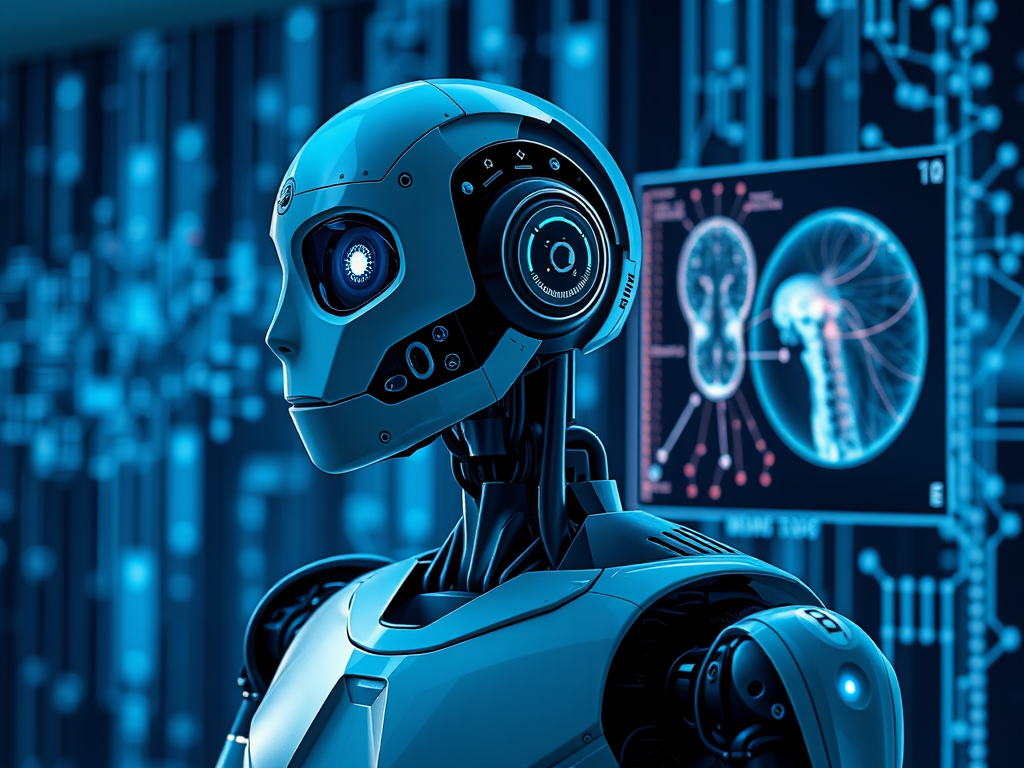
Engaging Introduction to Zero-Shot Learning (ZSL)
Zero-Shot Learning (ZSL) is a groundbreaking concept in the field of artificial intelligence and machine learning, enabling systems to perform tasks without requiring specific training data. Unlike traditional models that rely heavily on labeled datasets for training, ZSL leverages knowledge transfer from previously learned tasks to make predictions on unfamiliar tasks. This remarkable ability to generalize and adapt to new challenges is becoming increasingly significant in applications such as robotics, natural language processing (NLP), and medical imaging.
Recent breakthroughs have illustrated how ZSL can enhance machine learning models, leading to empowered applications that are capable of able to tackle complex problems in the real world. From robots that can adapt to fluctuating environments to NLP systems that understand multiple languages without training, the potential of ZSL is boundless.
Zero-Shot Learning in Robotics
The application of Zero-Shot Learning in robotics has revolutionized how machines interact with their environments. Traditionally, robots required extensive retraining for each new task, limiting their versatility. With ZSL, robots can adapt to novel tasks on the fly. This flexibility is crucial in complex environments where they might encounter variables or obstacles they haven't been trained on.
For example, consider a robot tasked with performing peg insertion. Instead of needing specific training for every new peg configuration, ZSL allows it to apply learned skills to similar but unseen scenarios. Other applications include improved navigation and manipulation tasks where gait adaptation can lead to more human-like movements in humanoid robots, enhancing their usability in everyday environments.
Zero-Shot Learning in Natural Language Processing (NLP)
NLP has also seen significant advancements through Zero-Shot Learning. Large language models, such as those used in translation, sentiment analysis, and categorization, can now perform tasks without explicit training on those specific tasks. Key to this achievement are techniques such as semantic embeddings and next-token prediction, which enable models to leverage contextual understanding from vast amounts of pre-existing data.
However, ZSL in NLP is not without its challenges. Issues like instability in classification can occur due to inconsistencies in prompt framing, calling for significant research into robust training methodologies. Nevertheless, the potential for cross-lingual applications and adaptable models in different linguistic contexts offers exciting opportunities for the future of language technology.
Zero-Shot Learning in Medical Imaging
In the medical field, Zero-Shot Learning enhances the capability of diagnostic systems, particularly in medical imaging. With frameworks like Momentum Contrast (MoCo), ZSL can facilitate improved zero-shot classification, notably in chest X-rays. These advancements have led to heightened diagnostic accuracy and increased area under the curve (AUC) scores, addressing the widespread problem of limited labeled datasets in healthcare.
ZSL not only optimizes the decision-making processes in diagnostics but also equips systems to handle unexpected pathologies, drastically enhancing efficiency. As a patient’s condition changes and new types of data become available, the adaptability of ZSL can lead to quicker and more effective treatments.
Future Directions and Challenges
Looking ahead, integrating Zero-Shot Learning with other AI fields, such as self-supervised learning, presents a promising frontier for exploration. However, challenges remain, particularly in overcoming prompt brittleness in NLP tasks that can drastically influence performance.
Research into how ZSL can synergize with other machine learning techniques will be crucial to unlocking its full potential. As the AI community continues to investigate and address these challenges, opportunities for groundbreaking innovations will emerge.
Conclusion with Key Takeaways
Zero-Shot Learning has made a transformative impact across multiple domains, including robotics, natural language processing, and medical imaging. By promoting efficiency and minimizing reliance on extensive labeled datasets, ZSL allows AI systems to adapt rapidly to new tasks and environments. As we navigate the evolving landscape of machine learning technologies, the potential for Zero-Shot Learning to reshape how we approach problems is immense, yet offering challenges that demand collaborative effort and ingenuity.
With ongoing research and development, Zero-Shot Learning stands to become a cornerstone of future AI advancements, propelling us towards a more capable and versatile technological landscape.