
GPT-6.1 Terra: The OpenAI Model Built to Run All Workday
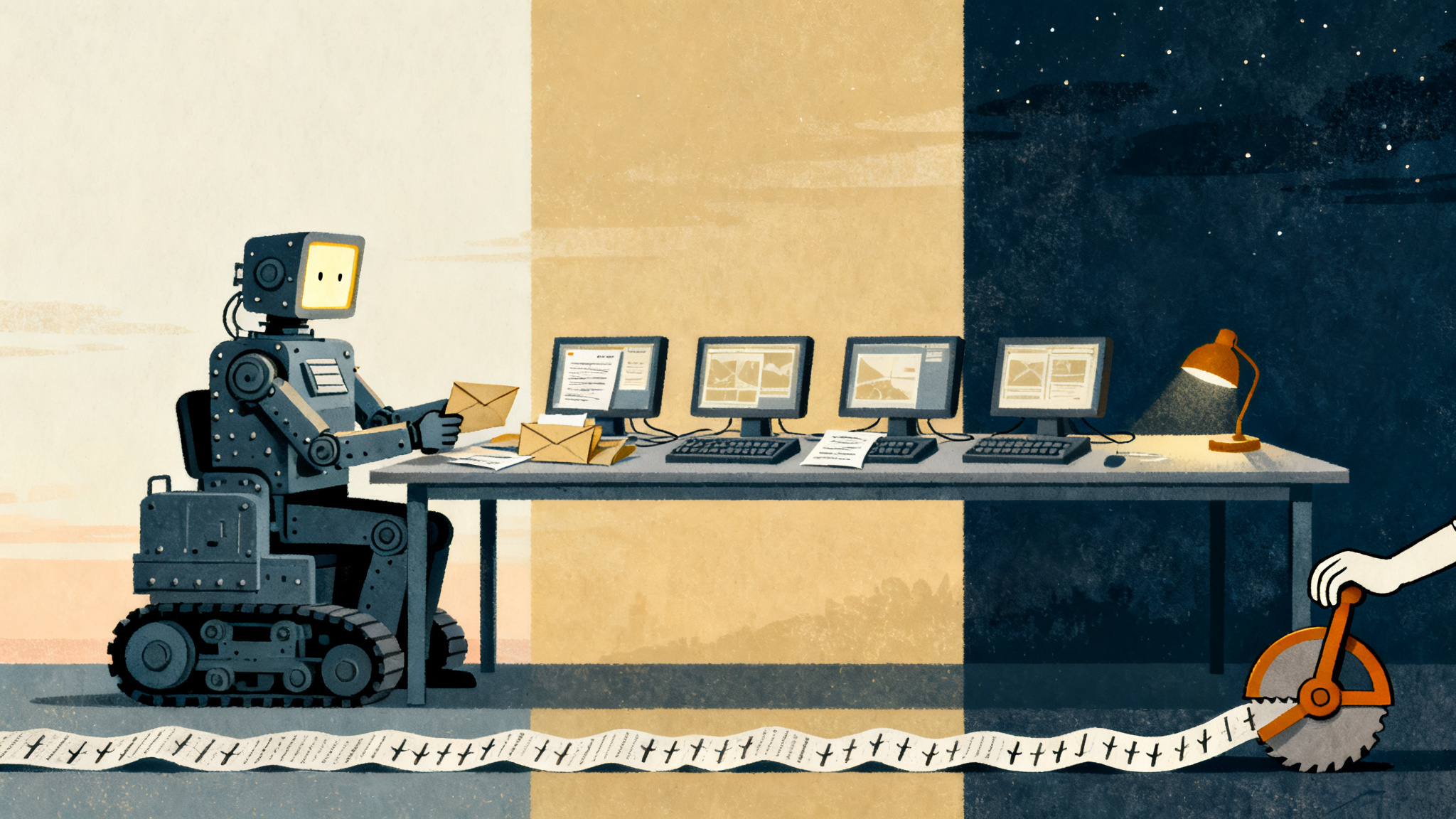
OpenAI has put out GPT-6.1 Terra, the newest entry in the GPT-6 series and the direct successor to GPT-5.6 Terra. The company's own description does the targeting for them: "a fast, efficient model for high-volume professional work, with strong image analysis and computer use capabilities," per the launch announcement and its system-card addendum.
Here's the part most coverage will skim past.
The words carrying that sentence aren't "computer use." They're "high-volume." You're looking at a mid-tier model sold on endurance, not a flagship flexing peak scores.
So the buyer's question flips. It's no longer "can this thing do the task." It's "what happens when I let it run my machine from morning to close."
GPT-6.1 Terra at a Glance
Quick reference, drawn only from what OpenAI has actually put on the record. Where something's missing, I'm saying so instead of guessing.
- Model family: GPT-6 series, mid-tier - Predecessor: GPT-5.6 Terra - OpenAI's positioning, verbatim: "a fast, efficient model for high-volume professional work, with strong image analysis and computer use capabilities" - Release date and rollout details: not covered in the launch materials cited here - Pricing tier: not published - Context window and input limits: not published - Benchmarks and rate limits: none published. Treat any number you see elsewhere as unconfirmed until it's on the record
That silence is deliberate on my end, not laziness. Vendor claims at launch deserve independent confirmation before you move a single workflow.
And I'd rather hand you a filter than a scoreboard I can't stand behind.
What OpenAI Announced About GPT-6.1 Terra
Strip the pageantry.
Every one of these launch pages now ships with the same gradient artwork, which nobody asked for. And the record is short. GPT-6.1 Terra is the newest model in the GPT-6 series, positioned as the successor to GPT-5.6 Terra. OpenAI describes it as built for visual reasoning, precise computer use.
And clearer, more natural writing, and the system-card addendum specifically calls out strong image analysis.
Look at what's doing the work in that list: perception and operation.
Read a screen, reason about what's on it, then drive the software sitting in front of it. That's a model designed to sit at a computer all day.
The least glamorous and most billable job inside a small operation.
Notice what isn't there, too.
No benchmark tables. No pricing grids. No rate limits. Everything above is OpenAI describing its own model, and when third-party numbers eventually land, the framework below still holds.
Why High-Volume Matters for Automation Buyers
Every model launch sells one of two things: brilliance on a hard problem, or cheap hours at scale. Terra's pitch words are "fast," "efficient," and "high-volume professional work." That's an endurance pitch. And endurance pitches are about unit economics you can run a business on.
Think freight, not motorsport.
A freight engine is boring and runs all night; the race car wins Sunday and spends Monday in the shop. When a vendor sells stamina, your question changes shape. You stop asking whether the model can ace one hard test and start asking what a task looks like repeated all day, every day, inside software that was never meant to be automated.
The pile of work that never justified automation is exactly what changes. Inbox triage, chasing invoices, reading screenshots, keying data into tools with no API. That work only gets interesting when you stop counting calls and the model absorbs the boring perception work. Terra is aimed squarely at it. The version math alone signals the intent: 5.6 to 6.1, a half-step that isn't a half-step.
GPT-6.1 Terra Computer Use: Your Desktop Becomes the API
When the model's interface is the screen itself, every app you own becomes programmable, API or no API.
For a solo operator running a decade of duct-taped tools, that's a serious promise.
The catch is that software built for humans carries human assumptions: confirmation dialogs, undo buttons.
And no concept of an audit trail.
Would you hand your mouse to an intern you'd never met and leave the room? You wouldn't. Same instinct should govern this.
A launch demo has a presenter, a curated scenario, and an undo. Your Tuesday has none of that. An agent working your real desktop across your real apps needs three things no demo ever shows: a permission model you've actually read, a log of every action it took. And a way to roll back what it did.
Across the builds I've shipped, the slow part was never the model misreading a screen. It was trust and review. Someone has to check what the agent did, and if checking takes as long as doing, you saved nothing. The wrapper around Terra matters more than the model itself.
Which is why the next section is the only part of this post that pays rent.
Risks of Running Agents All Day
This is where deployments live or die: the gap between a scripted demo and a full workday of real operation. Here's the week-one plan.
- Pick one high-volume task with a clean definition of done. "Sort the inbox into answer, archive, and escalate" qualifies. "Help me run operations" doesn't. - Run it as a shadow first. The agent proposes each action, you approve, and you note where it hesitates or guesses. That hesitation map beats any benchmark in a launch post. - Demand an action log. If your setup doesn't record every click, field, and file the agent touched, you don't have automation; you have liability with a nice demo. - Keep GPT-5.6 Terra running in parallel. The predecessor still exists, and "newer" isn't a migration plan. Switch when your own side-by-side runs say Terra wins your workload. - Gate anything that sends money, deletes files, or emails a human behind explicit approval. Not forever. Just until the log earns the trust.
GPT-6.1 Terra FAQ
Is GPT-6.1 Terra available now? OpenAI has published the launch announcement and the system-card addendum, which is what this post draws on. Rollout status, regions, and access tiers aren't covered in that material, so check OpenAI's own pages for the current state rather than trusting a summary. Including this one.
How is GPT-6.1 Terra different from GPT-5.6 Terra?
It's the successor in the GPT-6 series, positioned for high-volume professional work with strong image analysis and computer use. OpenAI hasn't published benchmark deltas between the two.
So "how much better" is exactly the question your own side-by-side run should answer.
What does GPT-6.1 Terra cost?
Not published in the launch materials — no pricing grids, no rate limits. I won't invent numbers to fill the silence.
Is GPT-6.1 Terra safe for computer use?
Depends entirely on your wrapper: permission model, action log, rollback path, and a human gate on anything irreversible. The model reads screens; your setup decides the risk.
Should I migrate off GPT-5.6 Terra yet?
Not yet. Run both on your workload, compare the hesitation maps and the logs. And let your own data make the call.
This launch isn't a smarter-model story. It's a stamina story, pointed at the part of your day that API-friendly software never reached. And the marketing says so in plain words: high-volume, fast, efficient. The vendors will show you the screen-share. The operators who win are the ones who built the review loop, the action log. And the off switch before letting anything run unsupervised. Read OpenAI's announcement and the system-card addendum yourself, then pick one boring task and run the shadow test. One real run on your own work beats every launch-day chart.
It's the only benchmark I trust.
Sources
- OpenAI — Introducing GPT-6.1 Terra - OpenAI — GPT-6.1 Terra system-card addendum
Comments ()