
OpenAI, Erdős, And The New Wave Of AI-Solved Math Problems
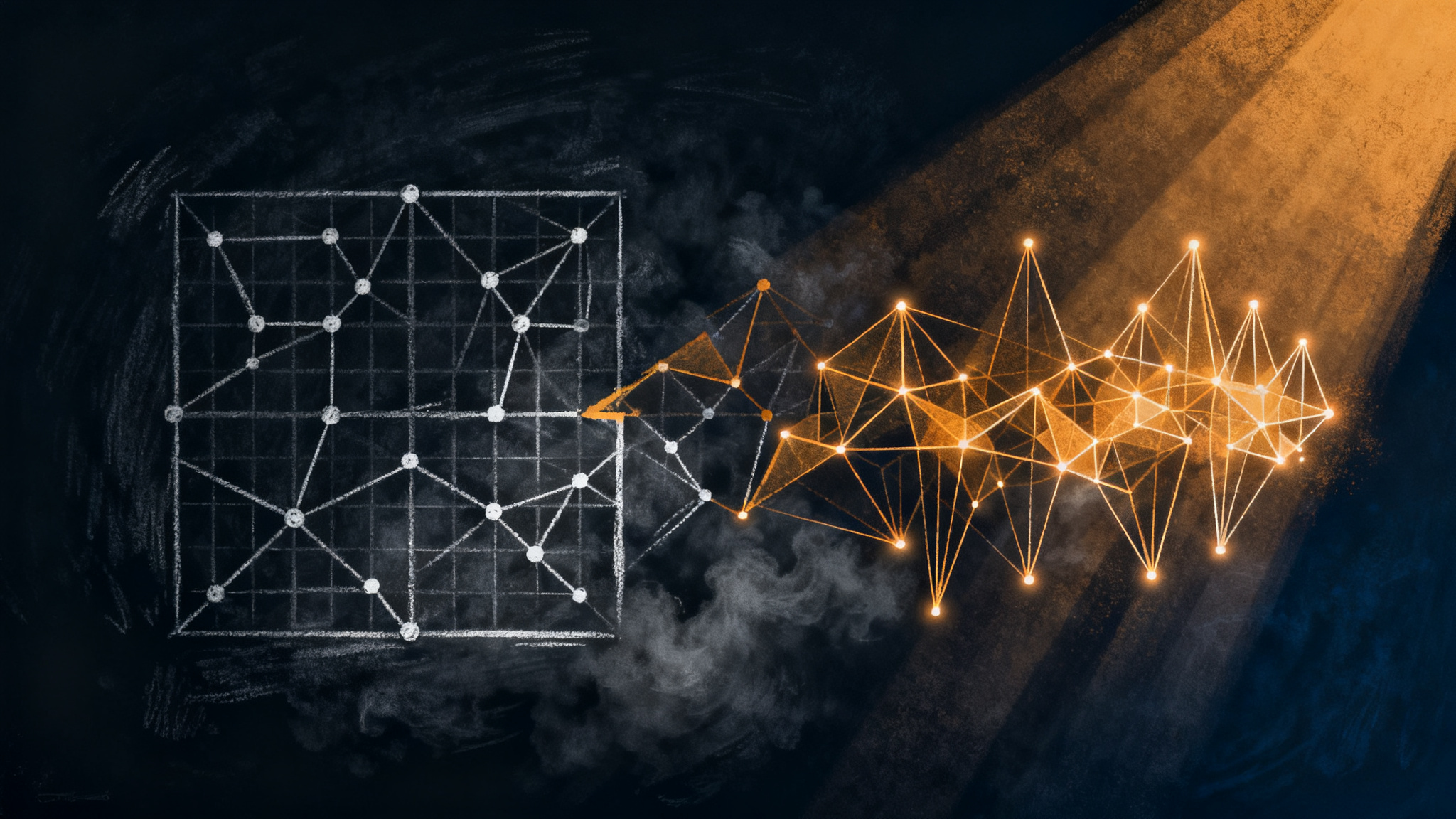
On May 20, 2026, OpenAI announced that a reasoning model had disproved an 80-year-old conjecture in discrete geometry.
Paul Erdős posed the unit-distance problem in 1946.
Since that day, the run of AI solving open math problems has not let up.
OpenAI's phrase for the result: "the first time AI has autonomously solved a prominent open problem central to a field of mathematics." Scientific American reported that a plain chatbot query came back as hundreds of pages of careful logic and calculations.
Treat May as the whistle that started the season.
By August 2026, Quanta Magazine reported that an unreleased OpenAI model, Astra, had.
On OpenAI's telling. Produced solutions to ten more open problems, three of them Erdős problems. Scientific American separately reported that OpenAI's GPT-5.6 Sol proved the cycle double cover conjecture, a question that had stood open for over fifty years. Every claim in that stack traces to the lab that gains from it. Keep that in view for everything below.
Five Years Of AI Solving Open Math Problems
DeepMind went first.
A 2021 Nature paper, written with Professor Geordie Williamson at the University of Sydney, described "a new formula for a conjecture about permutations that has remained unsolved for decades" and new progress on the combinatorial invariance conjecture for symmetric groups, per DeepMind's own account. LiveScience reported the researchers called this the first-ever important advances in pure mathematics generated by AI, plus a new connection between the algebraic and geometric structure of knots.
Human mathematician at the wheel in that setup. Model in the passenger seat, suggesting.
Then OpenAI ran a competition-style system at the International Mathematical Olympiad, where Scientific American reported it took 35 of a possible 42 points. Exactly the gold-medal minimum. Solving five of the six problems.
The next step removed most of the human. Forbes: AI reproduced an Erdős primitive set conjecture, one a human mathematician had already proved, in about 80 minutes. And the unit-distance disproof landed on May 20, 2026. Then GPT-5.6 Sol. Then Astra's ten.
Professor's assistant in 2021. Claimant to ten open problems in 2026. That slope is the actual story, and it stopped being a math story a while back.
What OpenAI's Erdős Unit-Distance Disproof Actually Claims
One detail sits at the center of this. TechCrunch reported that OpenAI credited the proof to "a new general-purpose reasoning model, not a system specifically designed to solve math problems or even this problem in particular." Not a bespoke prover.
Not a hand-tuned search aimed at one conjecture. The same general class of model did the work.
Mathematicians did not shrug. Scientific American quoted experts calling the method "clever" and "elegant." OpenAI posted that for nearly 80 years the field believed the best solutions "looked roughly like square grids," and that the model overturned that belief by finding "an entirely new family of constructions that performs better." GPT-5.6 Sol carries the same shape: Scientific American described a proof that applicable graphs can be "doubly covered with no more than eight well-chosen loops," with certain graphs excluded for technical reasons.
A model producing a family of constructions nobody pictured across eight decades does not fit the "fancy autocomplete" label. No declaration here that autonomous mathematics has arrived. The burden of proof simply moved, and the vendors know it.
How To Verify AI-Solved Math Problems
The ground underneath this is not clean.
In 2025, OpenAI executives posted on X that GPT-5 had solved 10 previously unsolved Erdős problems. It later emerged: "GPT-5 didn't actually solve those problems; it just found solutions that already existed in the literature." Thomas Bloom, who maintains the Erdős Problems website, explained that an "open problem" on his site meant he personally did not know a solution. Not that humanity lacked one. His verdict on the original post: "a dramatic misrepresentation."
So the 2026 announcements showed up carrying receipts. TechTimes reported that each Astra solution ships with a machine-checkable Lean 4 certificate that "any reader with a laptop can verify independently." The proofs were published August 1 beside a 249-page technical manuscript and a 62-page account of how the arguments came together. 249 pages, not a tidy 250.
Nobody rounds that.
The claimed results run across sphere packing, group theory, quantum information, lattice cryptography, and extremal combinatorics. Including a disproof of the Connes Rigidity Conjecture posed by Fields Medalist Alain Connes in 1980, the first improvement to the general upper bound on high-dimensional sphere-packing density since 1978. And stronger hardness results for the closest vector problem, with implications for lattice-based post-quantum cryptography. OpenAI put the total compute cost at around $2,000. Independent expert review remains the standard for acceptance. That is the correct standard.
One person's arc says most of it. Bloom, the same man who called the 2025 post a misrepresentation, was among the mathematicians. Alongside Noga Alon and Melanie Wood. Whose companion remarks OpenAI published in support of the unit-distance disproof. The company did not become honest. The artifacts changed.
A mechanic who hands you the worn part in a plastic bag gets fewer arguments than one who says trust me. Same invoice, different evidentiary weight. Receipts did that.
FAQ: The Erdős Problems And AI Proofs
Did AI really solve the Erdős unit-distance problem?
OpenAI claims a general-purpose reasoning model disproved it on May 20, 2026, and published supporting remarks from named mathematicians including Thomas Bloom, Noga Alon, and Melanie Wood. Independent expert review remains the acceptance standard, so the accurate status is: claimed, engaged by experts, not yet ratified by review.
What is the unit-distance problem?
A question in discrete geometry posed by Paul Erdős in 1946, 80 years old at the time of the disproof. OpenAI said mathematicians had long believed the best solutions "looked roughly like square grids," and that its model found "an entirely new family of constructions that performs better."
Can the Astra proofs be checked?
Per TechTimes, each of the ten claimed solutions comes with a machine-checkable Lean 4 certificate that "any reader with a laptop can verify independently." The proofs were published August 1 with a 249-page manuscript and a 62-page account. Machine checking verifies the logic; expert review still decides acceptance.
What did the Astra run cost?
Around $2,000 in total compute, by OpenAI's own accounting.
Has OpenAI claimed solved Erdős problems before?
Yes. In 2025, executives said on X that GPT-5 had solved 10 previously unsolved Erdős problems. It later emerged those solutions already existed in the literature.
What A $2,000 Proof Bill Changes For Client Work
Ten open problems for around $2,000 of compute, on OpenAI's own accounting, is frontier-grade analytical reasoning priced like a month of SaaS subscriptions. Sphere packing knowledge not required to care about that ratio. Three things follow for anyone billing for AI work.
1. Verification becomes the scarce skill. Answers got cheap.
Checking them did not.
Mathematics kept its bar.
Independent expert review still decides what counts. 2. Clients will set this standard eventually. The first time an AI deliverable embarrasses them, they demand proof. Arrive at that standard before they do. 3. Ship the certificate, not the claim. The entire credibility swing between 2025 and 2026 came from attaching artifacts a stranger can run. The operator version: passing tests, replayable logs, the intermediate numbers behind every conclusion.
A deliverable that only verifies while you are on the call is sold trust. Trust does not scale past you.
Reread every vendor announcement with 2025 in memory. When a lab announces a breakthrough, the operative question is what a third party can independently run today. If the honest answer is nothing, file it under marketing and check back later.
Math went from assistant to claimant in five years. Burned to believed in one. The trigger was not raw intelligence. It was proofs a stranger can check on a laptop. Build that property into your own output, in whatever field you actually work in. Write one sentence describing how a client verifies your last AI deliverable without trusting you. If that sentence does not exist, that is the next thing to build. If you want help instrumenting it, that is the work my shop does.
Sources
- TechCrunch. OpenAI claims it solved an 80-year-old math problem - Scientific American. AI just solved an 80-year-old Erdős problem - Quanta Magazine. Why the legendary Erdős problems are falling to AI - Scientific American. OpenAI model earns gold medal score at IMO - Forbes — AI solved a mathematical problem that stumped the best minds for decades - DeepMind — Exploring the beauty of pure mathematics in novel ways - LiveScience — DeepMind AI advances pure mathematics - TechTimes — OpenAI's Astra solves ten decade-old math problems with machine-checkable Lean proofs
Comments ()