
OpenAI Posted Apple's Trade-Secret Texts. The Case Cracks.
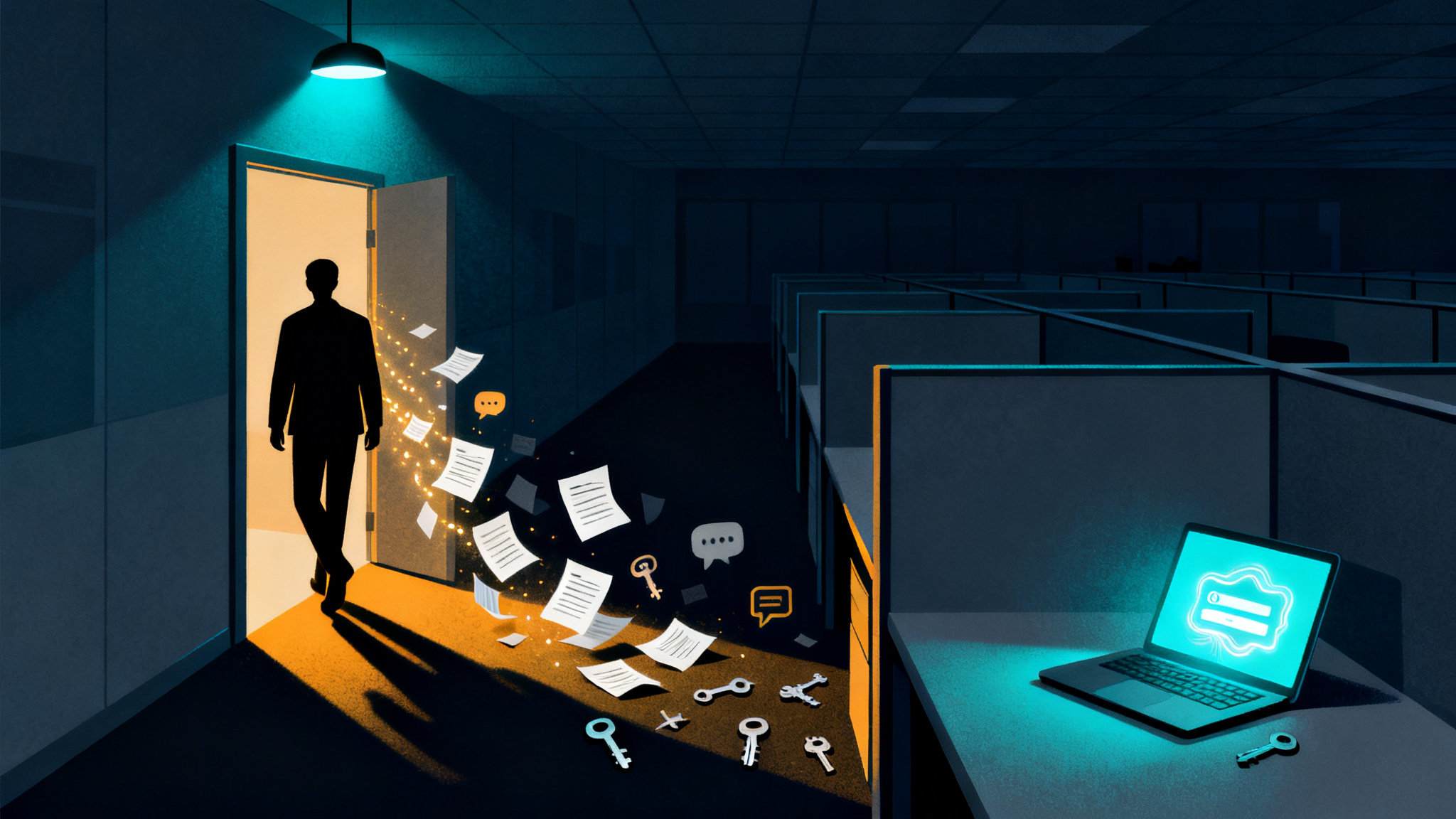
OpenAI published private chats from 2 former Apple employees in a blog post over the first weekend of August 2026, to rebut Apple's trade-secret theft lawsuit filed July 10 in the US District Court for the Northern District of California.
The receipts show Apple's outside counsel emailed the wrong OpenAI employee after mixing up two similar Asian surnames (Wang and Chang), that Apple's own staff texted former engineer Chang Liu for help after his January 22 departure. And that Tang Tan repeatedly told his team not to use others' confidential information. OpenAI calls the suit "careless, aggressive. And oddly personal" and insists it does not have, nor want, Apple's trade secrets (Business Today). For small operators, the takeaway is less about which giant wins and more about what happens to your confidential files the day someone walks out the door.
How Apple built the complaint
Apple filed on July 10, 2026 against OpenAI, its hardware unit io Products.
And former Apple employees Tang Tan and Chang Liu. The suit alleges OpenAI poached Apple staff and turned job interviews with Apple engineers into a pipeline for confidential information, physical components. And details about unreleased products, manufacturing methods, and suppliers.
Apple claims OpenAI used those secrets to accelerate its own push into consumer hardware.
An Apple spokesperson put it bluntly: "significant evidence has emerged suggesting individuals employed by OpenAI wrongfully took Apple's secret and confidential information regarding our unreleased technologies, processes and products." Tang Tan, formerly a vice president at Apple, is alleged to have carried Apple supplier information to OpenAI and to have encouraged interviewees to divulge confidential details.
Chang Liu is alleged to have brought trade secrets tied to unreleased Apple technologies when he joined OpenAI.
That is a serious complaint on its face. Trade-secret cases live or die on access and intent. And Apple framed both as clean and one-directional: employees left, secrets followed, OpenAI profited. Then the emails came out.
The emails that broke the narrative
Apple's complaint asserts OpenAI "never responded" to Apple's February 2026 outreach warning about the alleged trade-secret issues (NBC News). Emails reviewed by NBC News show that is not the full story: OpenAI did respond in February.
According to those emails, an outside attorney representing Apple mixed up the names and email addresses of two OpenAI employees with the surnames Wang and Chang, apologized. And the exchange then turned tense and stopped months before Apple sued. OpenAI says Apple now concedes its outside lawyers emailed the wrong person only after OpenAI pointed it out.
OpenAI's top lawyer went further, telling Apple that its outside counsel had "invented" a phone call, claiming a discussion with OpenAI's General Counsel that, per OpenAI, "they now concede never happened" (Business Today).
That is not a footnote. A trade-secret plaintiff that misstates its own warning-and-response history in the complaint is handing the defense a credibility problem before discovery even starts. When the party that filed the case cannot keep straight who said what to whom, judges notice.
The texts OpenAI says prove the story runs both ways
This is the part developers keep screenshotting. OpenAI's blog includes iMessage and email threads where Apple staff reached out to Chang Liu after his January 22 departure from Apple, asking him to help locate files and answer technical questions. OpenAI argues this contradicts Apple's portrait of Liu as a one-way misappropriator. And says Apple now concedes its own employees contacted Liu rather than the reverse.
On Tang Tan, OpenAI's blog cites multiple iMessage and email communications in which Tan told his team, "we do not want. And must not use, any confidential information from other companies." OpenAI frames that as evidence Tan actively tried to avoid receiving others' trade secrets.
OpenAI's top-line position is unambiguous: "We do not have, nor want, any of their trade secrets." It accuses Apple of making "vague accusations" and "trying to change their narrative," and argues Apple built the case around its own security failures, specifically its inability to manage former employees' residual access to internal systems. The public letter calls Apple's litigation strategy "careless, aggressive, and oddly personal" (Business Today).
This is a deliberate choice.
OpenAI is fighting this in the court of public opinion as much as in the courtroom, releasing internal emails and chat logs to dismantle the narrative before a judge rules.
What this means for you
You are not Apple and you are not OpenAI. But you do hire people, you do let them go. And you almost certainly do not have their access revoked the same hour they leave.
That gap is the real story hiding under the headlines.
When an employee departs, the questions that matter are concrete.
Is their laptop wiped, or did it leave with a full Slack history? Are their cloud credentials rotated, or are they still live in a shared password manager three months later? My agency writes access revocation into every offboarding step because the alternative is the exact scenario Apple is now litigating: someone leaves, still has the keys. And the company only finds out later that something walked.
The "wrong Asian name" detail reads as a punchline, but it points at a real operational failure. Outside counsel emailed the wrong person and then, per OpenAI, the chain quietly died. Communication breakdowns at the top of a dispute are how minor issues metastasize into federal lawsuits. If your outside help cannot keep your counterparties straight, your escalation path is broken before it starts.
If you run a lean team and handle anything proprietary, do three things this week. Audit who still has access to what, and cut everyone who no longer needs it. Put offboarding into a written checklist rather than someone's memory. And if you ever warn another company about a trade-secret issue, do it in writing, send it to the right person, and keep the receipt. The side with the cleaner paper trail usually wins the argument. And sometimes it wins before the case gets near a verdict.
Two of the most valuable companies on earth are now trading screenshots in public.
The lesson is not who is right. Lesson: that your confidential information is only as safe as the worst process you run on the day someone walks. Want a second pair of eyes on your own offboarding and access hygiene? That is exactly the kind of cleanup my agency ships for small teams. And it is cheaper than a federal complaint.
Comments ()