
The AI Coding Debate Is Asking the Wrong Question
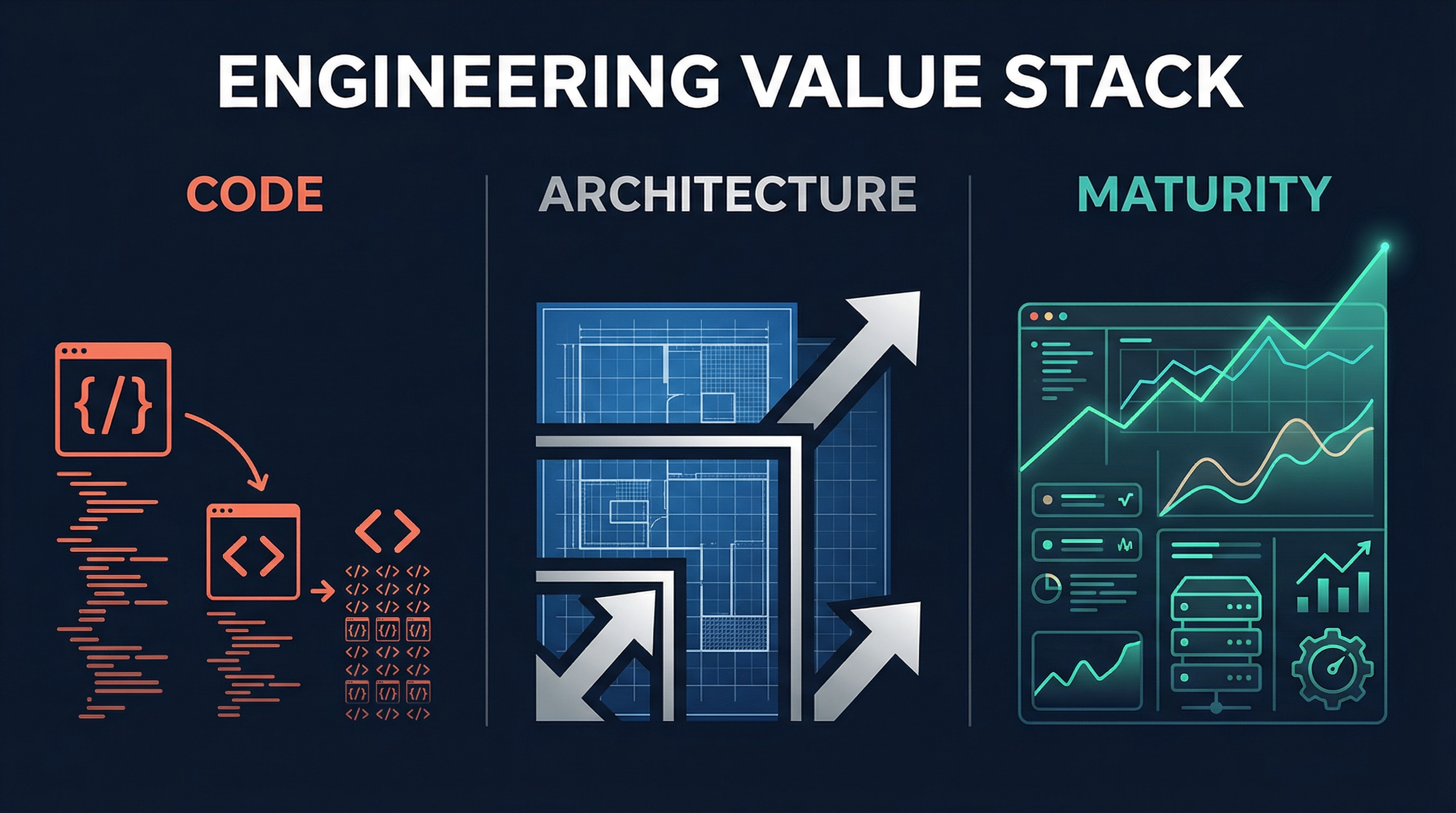
Everyone keeps asking whether AI will replace programmers. Sander Knape at a16z published a piece today that sidesteps the whole argument. His point: stop focusing on the wrong layer.
The question is not whether AI can write code. It can. It writes a lot of it, fast. The question is what happens to the rest of the job when that part becomes cheap.
His framework divides software quality into three layers. Code quality is now heavily automated. Architecture quality is becoming more important, not less. Service maturity is where the real competition is now, and most organizations have barely touched it.
Why Architecture Matters More When Code Is Cheap
Here is the counterintuitive part. Messy code plus clean architecture beats clean code plus messy architecture in an AI-first world.
AI-generated code is verbose and imperfect. It works, but it tends toward sprawl. Without strong architectural boundaries, a codebase generated at high volume becomes unmanageable within months. The code exists, it runs, and nobody can safely change anything without breaking something unexpected.
Organizations tolerated weak architecture in the past because rewriting was expensive. If you had a bad abstraction, you lived with it because rebuilding was a six-month project. When AI can generate a replacement component in minutes, the calculus changes. Architectural debt becomes the only real debt that matters. The code is always rewriteable now. The system boundaries are not.
The Layer Nobody Has Built Yet
Service maturity is where Knape sees the most opportunity and the least attention. Monitoring, on-call ownership, compliance, rollout strategies. These are not individual engineer responsibilities. They are organizational capabilities.
An AI can generate a microservice. It cannot own that service. It cannot be paged at 3 AM when the deployment breaks. It cannot be legally responsible for a data processing compliance framework. These are human and organizational problems that code generation does not touch.
The implication for hiring is direct. Organizations will spend less on implementation capacity. They will spend more on people who can design systems that stay maintainable at scale and operate those systems reliably. The engineering value is moving up.
What This Means for Individual Engineers
If you write code and worry that AI is coming for your job, this reframes the anxiety into something more useful. The engineer who writes code is becoming less scarce. That is true. The engineer who understands where architectural boundaries should be, who can evaluate whether a system will survive growth, who knows how to build in monitoring and ownership from the start — that person is not going anywhere.
Your job is not disappearing. It is leveling up. The bar for useful engineering just moved from producing code to producing coherent systems.
The teams that get this will build things that survive their own success. The ones that do not will spend their time managing AI-generated messes they cannot safely change. The difference is architecture. It always was. AI just made it obvious.
Sources: - Sander Knape — Engineering Moving Up the Stack (a16z) - Hacker News Discussion